
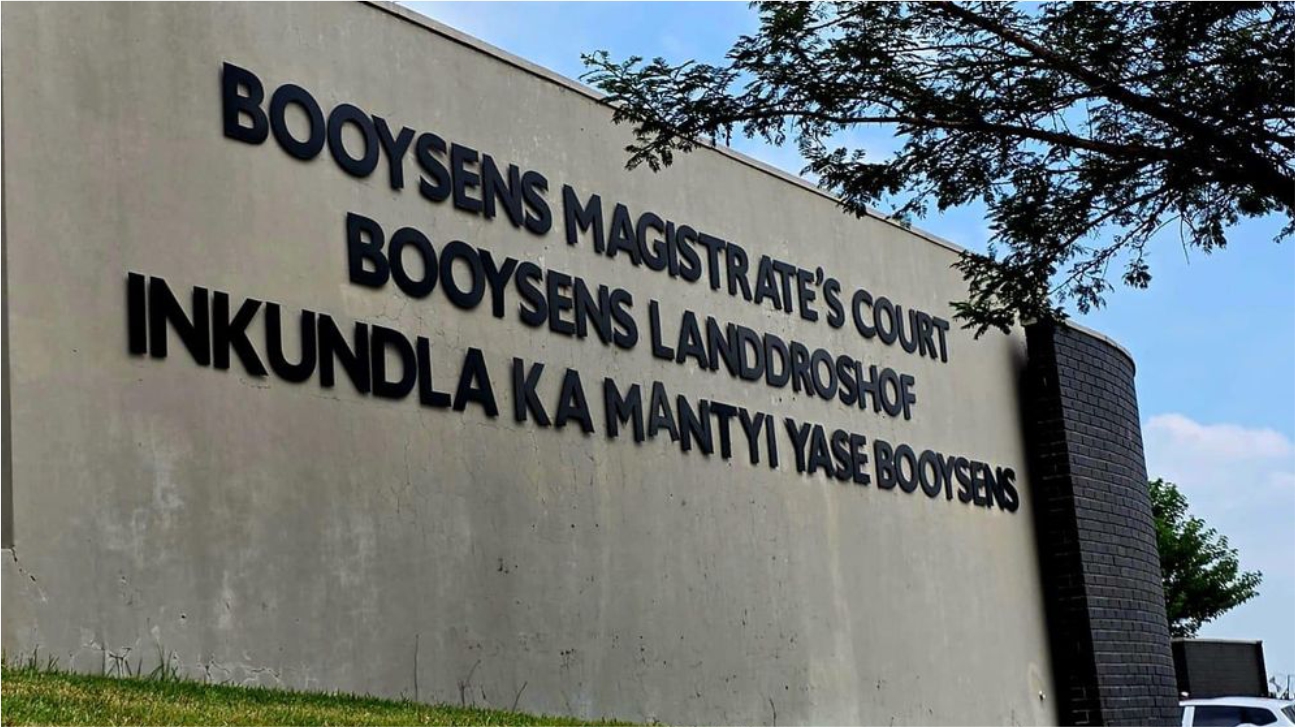
Strengthening Security After the Booysens Court Shooting: Lessons for Property Owners in Johannesburg
On 20 January 2026, a shocking shooting incident unfolded outside the Booysens Magistrate’s Court in Johannesburg, where gunmen opened fire at the entrance, injuring three people and killing two others. The attack occurred as individuals were exiting the court premises following a pretrial conference, and suspects fled the scene before law enforcement could intervene.
The incident has drawn urgent calls from both the Gauteng Provincial Legislature and the Law Society of South Africa for a comprehensive review of security measures at courts and surrounding precincts, given that courts are legally designated gun-free zones and have historically been perceived as secure environments.
This tragic event exposes several weaknesses in how security is often implemented — whether by law enforcement, contracted private security, or facility managers — and underscores the need for robust, proactive, and intelligence-driven security strategies that go beyond basic static guarding.
What the Incident Tells Us About Security Vulnerabilities
Several key issues have emerged from reporting on the shooting:
1. Attackers accessed a supposedly secure zone without immediate intervention.
Although courts have access control and often screening measures, the attackers were still able to approach and open fire near a key entrance point.
2. Perimeter and external areas remain weak points.
While internal court screening devices may function correctly, external perimeter control, parking areas, and public walkways were not sufficiently secured to prevent armed assailants from closing distance on targets.
3. Security protocols failed to integrate intelligence or predictive threat assessment.
The incident was reportedly linked to a pre-existing murder case, suggesting that criminal retaliation and violence risks were foreseeable in that context.
4. The response was largely reactive rather than preventive.
Authorities and private security were engaged only after shots were fired, rather than having layered measures that might have deterred, delayed, or disrupted the attackers before they reached their victims.
Lessons for Property Owners, Managers, and Security Professionals
Whether for residential estates, commercial buildings, industrial sites, or high-risk properties, the principles that emerge from this incident are clear: reactive security is not enough. Security must be anticipatory, layered, and intelligence-enabled.
Layered Access Control
Effective security must consider more than one checkpoint. At a court, only a single unsupervised entry point may have existed — and that proved insufficient. On private properties, robust access control should include:
-
Controlled entry/exit gates with dedicated attendants
-
Vehicle and pedestrian screening zones
-
CCTV integrated with live monitoring
-
Perimeter barriers that delay intruders and funnel them into observable zones
Intelligence-Led Risk Assessment
Mudzimiri Security Services builds security plans based on intelligence and context-specific threat analysis, not generic checklists. For example:
-
Understanding known conflict vectors (e.g., disputes involving residents, crime patterns)
-
Monitoring local crime trends to anticipate escalation periods
-
Briefing deployed teams on specific individuals or groups that pose heightened risks
This proactive stance can identify risks before they materialize, whereas reactive security waits for incidents to happen.
Trained, Alert, and Supervised Personnel
Security guards are often trained only for presence, not for prevention. At a facility like a court, static guards may have been present, but without:
-
Tactical situational awareness training
-
Communication protocols linked to rapid response units
-
Supervisory oversight capable of making split-second decisions
Security teams risk becoming passive observers instead of active protectors.
At Mudzimiri Security Services, we emphasize continuous training, firearms discipline where applicable, and clear command structures to ensure that guards and response units act decisively when threats appear.
Real-Time Monitoring and Rapid Response
Ideally, security systems should not only observe events but trigger immediate response protocols — including:
-
Mobile patrol dispatch
-
Alerting local law enforcement when escalation is detected
-
Evacuation plans for civilians in the vicinity
This kind of integration shortens reaction times and helps prevent situations from becoming tragedies.
How Mudzimiri Security Prevents Similar Incidents
At Mudzimiri Security Services, our approach is framed around risk mitigation, prevention, and accountability:
Structured Security Assessments
Every engagement begins with a deep risk assessment tailored to your property’s location, usage patterns, and potential threat vectors.
Intelligence-Driven Deployment
Rather than static “watching and waiting,” our teams operate with contextual awareness, monitoring for behavioural clues, patterns, and potential escalation triggers.
Layered Protective Measures
We implement multi-layered access control, perimeter observation, and technological support (e.g., integrated CCTV, alarms, patrol routing).
Trained & Supervised Teams
Our officers receive regular supervision and training, including scenario drills, communication protocols, and escalation procedures — not just job checklists.
Rapid and Controlled Response Capability
Where clients require armed response capability — always compliant with PSIRA and local regulations — our teams can respond efficiently to credible threats, which greatly improves protective outcomes.
Final Thought: Prevention Must Be Intentional
The events at Booysens Court are a stark reminder that no location is immune to violence if security measures are limited, reactive, or poorly coordinated. For property owners and managers, security must be tactical, informed, and integrated with both physical measures and human intelligence.
If you are responsible for the safety of people and assets in Johannesburg or surrounding regions, the lessons from this tragic incident are clear: security must do more than watch. It must anticipate, interpret, and act.
To discuss how Mudzimiri Security Services can strengthen protection at your property, contact us for a comprehensive security risk assessment and tailored strategy.
